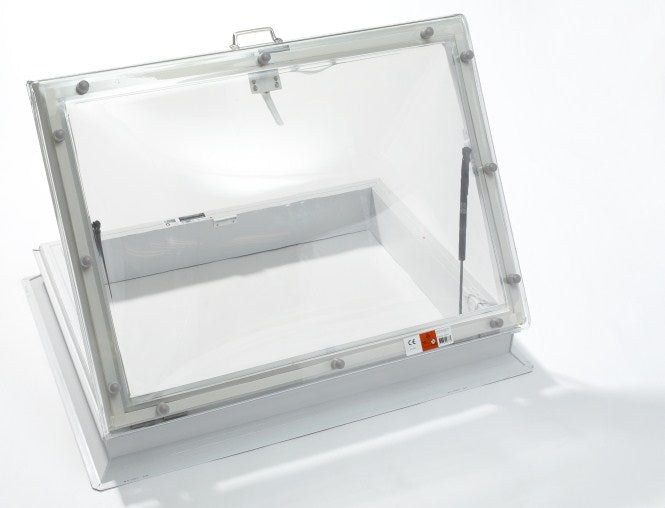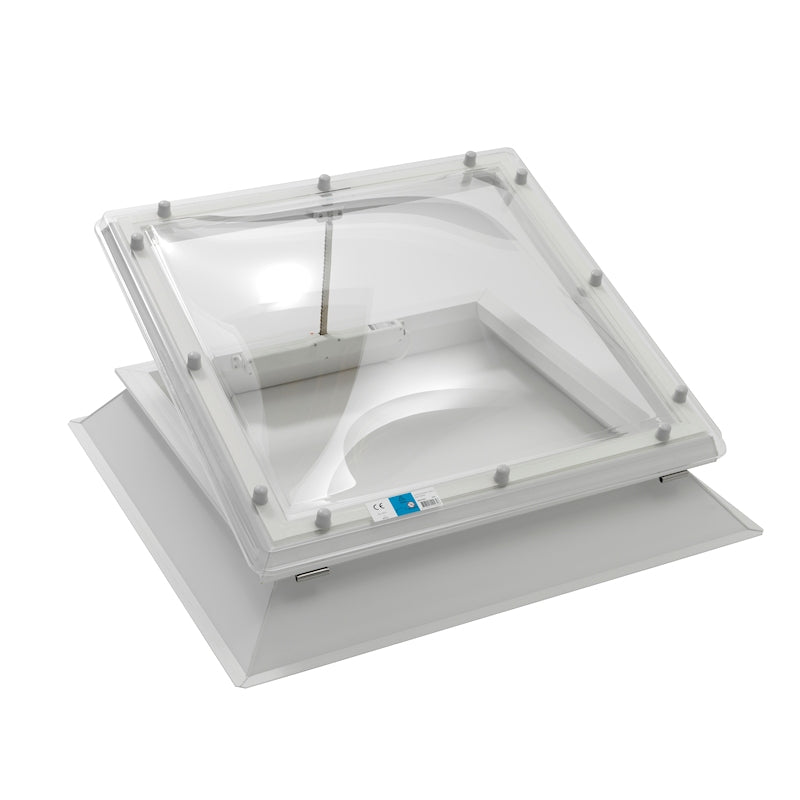
Thermadome Dome Rooflight PVC Kerb and Manually Hinged Opening - Rooflights & Skylights

Shop for Domed Rooflights

Domed rooflights are a practical and durable way to let in additional light to a room that a flat glass skylights may not be able to offer.

Available in a variety of sizes, shapes and glazing options, it’s easy to find the perfect domed rooflights, skylights and roof lanterns to suit all your needs.

Additional ventilation and UV protection options make our domed skylights ideal for different building styles and usage.

Filter products

FAQs

  • What are domed rooflights best used for?

    Domed rooflights are best suited to flat or low-pitched roofs, where they provide an effective way to bring natural daylight into a building. Their raised, curved design helps shed rainwater and debris more efficiently than flat glazing, making them a practical and durable choice for roof extensions, garages, stairwells, schools, offices, warehouses, and other commercial buildings.

    These rooflights are particularly popular where cost-effectiveness, weather resistance, and ease of installation are important. Available in fixed, manually opening, and electrically operated versions, domed rooflights can also provide natural ventilation alongside increased daylight.

  • Are domed rooflights better than flat ones for drainage?

    In many cases, a domed rooflight can be the best choice. The curved profile of a domed rooflight helps rainwater run off the surface more easily, reducing the likelihood of water pooling around the glazing. This makes domed rooflights particularly well-suited to flat roofs or roofs with minimal falls, where drainage can be a concern.

    Flat glass rooflights are designed to manage water effectively, but they typically rely on the roof's fall and the height of the upstand or kerb to encourage water run-off. When installed correctly, both options can perform well, but domed rooflights often provide an additional level of reassurance in areas prone to standing water.

    While domed rooflights generally have an advantage when it comes to drainage, flat glass rooflights are often chosen for their contemporary appearance, flush internal finish, and unobstructed views of the sky.

  • Can domed rooflights be opened?

    Yes. Domed rooflights are available in both fixed and opening configurations. Opening models provide natural ventilation and are commonly used in kitchens, bathrooms, and stairwells, where airflow is important.

    They can be operated manually using a winding rod or electrically via a motor for added convenience. Some electric models can also be fitted with rain sensors, allowing the rooflight to close automatically if bad weather is detected. This is particularly useful where you may want to minimise any damage that could be caused by adverse weather conditions.

    If ventilation is an important requirement, it's best to specify an opening rooflight at the design stage, as upgrading a fixed unit later can be more complex and costly.

  • What materials are domed rooflights made from?

    With a domed rooflight, the dome itself is typically manufactured from polycarbonate. Polycarbonate is a lightweight and durable material that offers excellent impact resistance, good light transmission, and effective thermal performance. The kerb and frame components are generally made from PVC or aluminium, depending on the product specification.

    Polycarbonate domes are available in single, double, triple, and quad skin configurations. Additional layers create insulating air gaps within the glazing, helping to reduce heat loss and improve thermal efficiency. As a result, multi-skin domes are often specified for projects where energy performance is an important consideration.

  • Do domed rooflights provide good thermal performance?

    Yes, modern domed rooflights can provide excellent thermal performance, particularly when specified with multi-skin polycarbonate glazing.

    Double skin domes are often chosen for many residential and commercial applications, while triple and quad skin configurations provide enhanced thermal efficiency and reduced heat loss. This can help improve indoor comfort and support energy-efficient building design.

    When comparing options for your project, it's important to consider the U-value, which measures how much heat passes through the rooflight. Lower U-values indicate better insulation performance, making them a useful way to compare different products and specifications. If you're not sure which product best meets your requirements, our sales team have a wealth of knowledge and would be happy to help if you get in touch.