Shop for Rooflights and Skylights

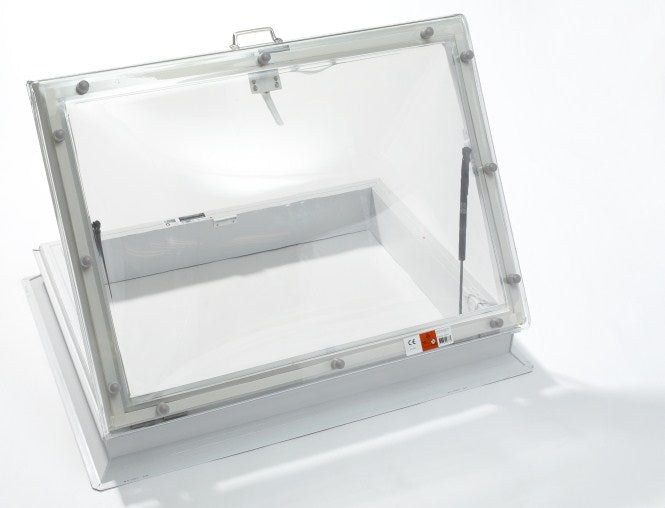
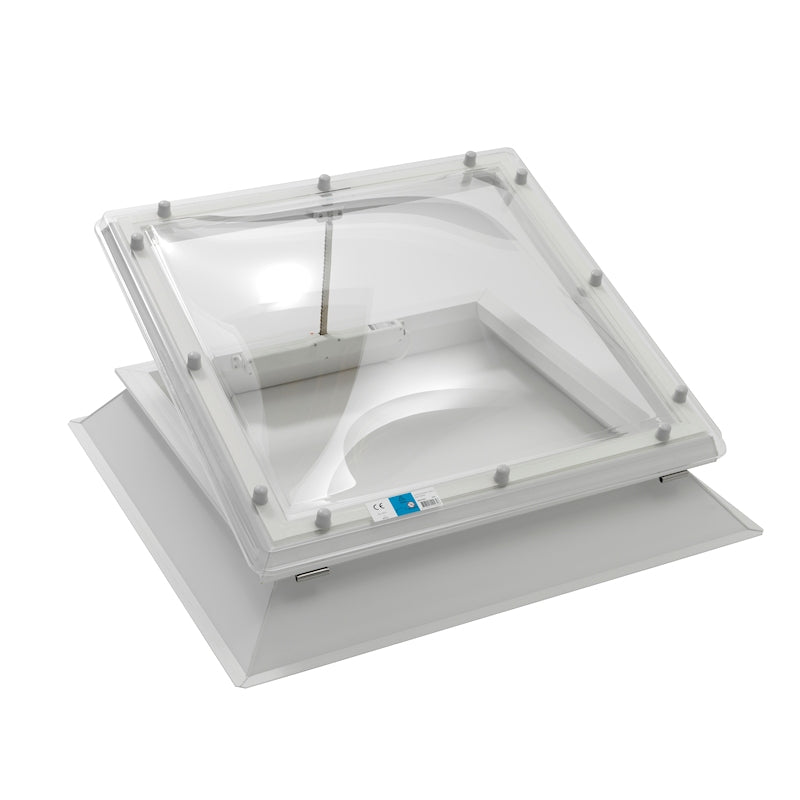
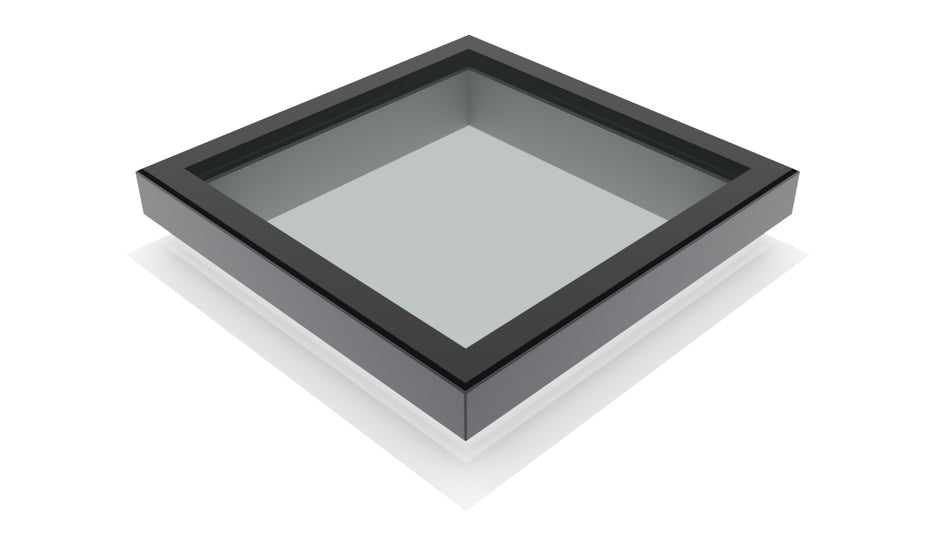
We are highly experienced suppliers of rooflights and skylights for all flat roof applications. Whether you are looking for a budget polycarbonate domed rooflight or a beautiful and minimalistic flat glass rooflight we have you covered!

If you're looking for a architectural feature then maybe a contemporary roof lantern is the right product for the job.

Have a look at the products below and feel free to contact our sales team with many years of industry knowledge. We can always find the right product to match your specifications, whatever your project may require.

Filter products

FAQs

  • What's the difference between a rooflight and a skylight?

    The terms rooflights and skylights are often used interchangeably, but there is a distinction. Rooflights are generally used on flat roofs, installed to sit flush with or close to the roof plane, and are often made of materials like polycarbonate. Conversely, a skylight typically refers to a glazed unit set at an angle on a pitched roof. Both serve the same purpose of bringing natural light into a space, but the right choice depends on your roof type and aesthetic.

  • How much does a rooflight cost?

    Rooflight prices vary depending on size, glazing specification, and product type. Entry-level polycarbonate domed rooflights start from around £170 inc. VAT, while fixed flat glass units typically begin from around £480. Opening and electric variants generally start from around £500, rising depending on size and specification.

    Prices above are for the rooflights only, and if you are using a professional contractor, you will also need to factor in installation costs. Pricing for installation will depend on your roof structure, whether any specialist work is required and whether you are including this as part of a larger project or undertaking this as a standalone requirement. When considering your budget for your rooflights, it's worth prioritising quality glazing and frame specification over upfront cost savings. A poorly insulated unit will cost more in the long run.

  • What size rooflight do I need?

    Choosing the right size comes down to three main factors: the floor area of the room below, the orientation of your roof, and the type of rooflight you're installing.

    As a starting point, aim for your rooflight glazing to cover 15-20% of the room's floor area. For a 20m² room, that is roughly 3-4m² of glazing. Consider which direction your room faces next to determine the size and number of rooflights required. In South or west-facing rooms, rooflights will receive more direct sunlight, so you may need less glazing to achieve the same light levels. Also, think about summer; solar gain can become a real consideration. North-facing rooms often benefit from a slightly larger area of glass to compensate for lower light levels.

    The type of rooflight you choose also influences sizing. Flat roof rooflights are typically measured by their external frame dimensions, while pitched roof rooflights are sized to fit standard rafter spacings. Roof lanterns are generally specified by their external footprint and ridge height, with popular configurations starting around 1000x1500mm.

    Don't feel constrained by installing just one rooflight; sometimes multiple smaller units work better than a single large one. Distributed glazing tends to spread light more evenly across a space and can reduce the structural complexity of a large single opening. If you're unsure, get in touch with our knowledgeable team for additional information for your project.

  • Do I need planning permission to install a rooflight?

    As a general guide, planning permission is not required when installing a rooflight. A rooflight usually falls under permitted development in England and Wales, meaning you won't need to apply for planning permission provided certain conditions are met. The unit must not protrude more than 150mm above the existing roof plane, must not be installed on a wall or roof slope that fronts a highway, and must sit no higher than the highest part of the roof. Meet all of these criteria, and you're usually good to go.

    However, there are important exceptions to be aware of. If your property is in a conservation area, an Area of Outstanding Natural Beauty, or is a listed building, you may find that permitted development rights are restricted or removed entirely. Some new-build developments and leasehold properties also have specific covenants that limit roof alterations. If any of these apply to your property, you'll need to seek formal planning approval before going ahead.

    It's also worth noting that permitted development rights cover planning permission only. Building regulations are a separate requirement, and any rooflight installation will need to comply with Part L (energy efficiency) and potentially Part A (structural integrity). Part A applies because it relates to the structural safety of the roof: when installing a rooflight, the roof must be strong enough to support the unit, and any opening formed in the roof must be properly trimmed, supported or strengthened where required. This is particularly relevant for larger units or flat roof installations. The installer, builder or structural engineer should confirm the roof structure is suitable before installation. Always consult your local planning authority or a qualified installer if you have any doubt.

  • Are rooflights energy efficient?

    At R&S, we generally recommend units with double glazing, low-emissivity (low-E) coatings, and thermally broken frames. All of these factors minimise heat loss and reduce solar gain, particularly in the summer months. Well-specified rooflights can also reduce your reliance on artificial lighting and may lower energy consumption over time.

    In England, rooflights generally need to achieve a maximum U-value of 2.2 W/m²K to meet the limiting standards in Building Regulations Part L. This applies to rooflights used in new-build homes, extensions and replacement installations. A lower U-value means better thermal performance, so where possible, choosing a rooflight below this maximum can help improve energy efficiency.

    Rooflights are assessed slightly differently from standard vertical windows. Their U-value is usually calculated in the horizontal position and may be shown as a Ud-value, based on the developed surface area of the rooflight.

    For new builds, the final specification should always be checked by the project designer, SAP assessor or Building Control, as the overall property still needs to meet its full energy performance requirements.